 Sunday, September 20, 2026
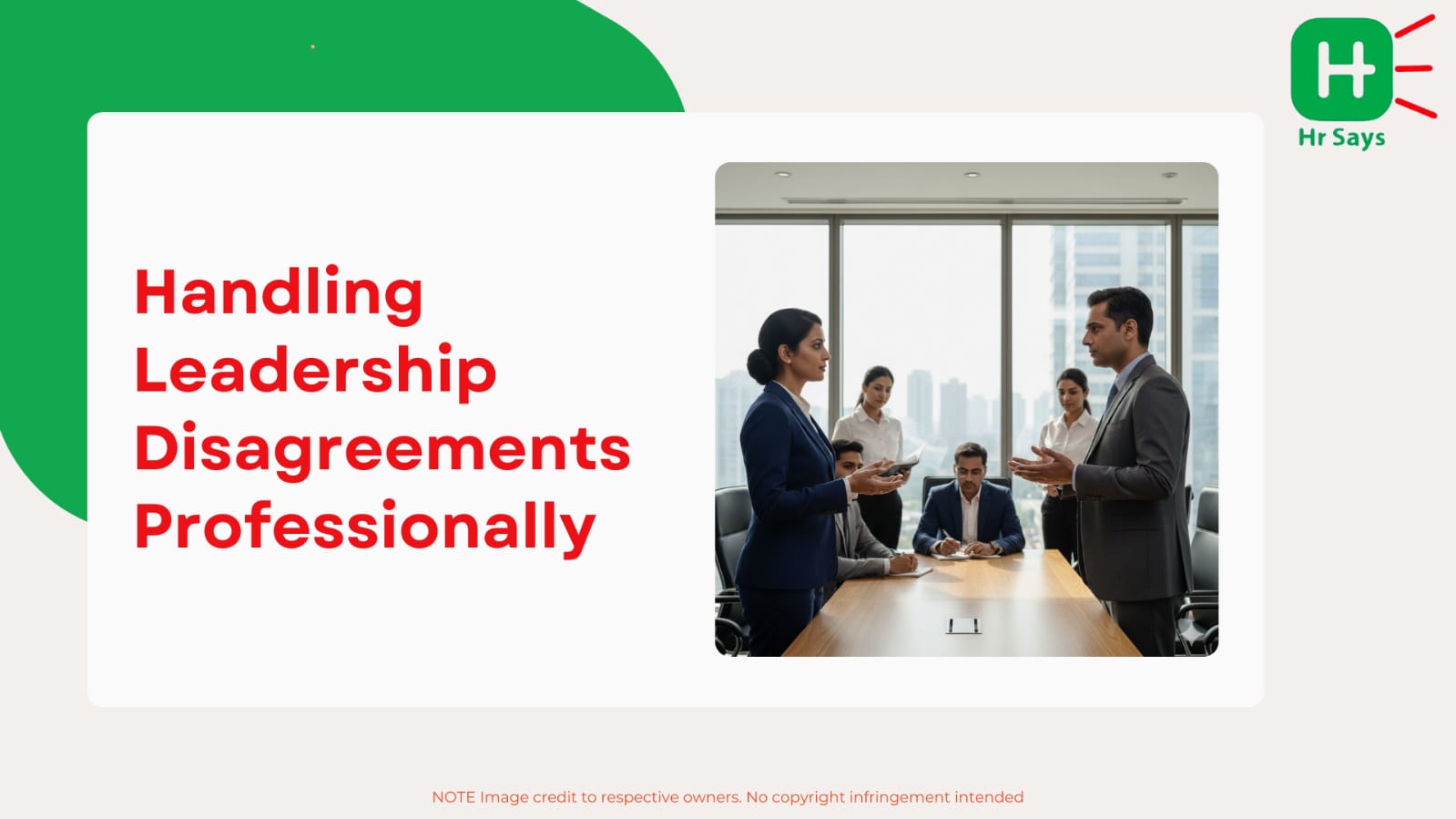
 Leadership disagreements are unavoidable but manageable. When approached with emotional
intelligence, clear communication, and alignment focused thinking, conflict can strengthen trust,
improve decision making, and protect workplace culture without damaging professional
relationships.
Leadership disagreements are unavoidable but manageable. When approached with emotional
intelligence, clear communication, and alignment focused thinking, conflict can strengthen trust,
improve decision making, and protect workplace culture without damaging professional
relationships.




The disagreements made at the highest level of leaders are usually made silently, out of the meeting rooms and e-mail messages. They define judgments, manners and results. Such moments can enhance the leadership communication rather than the trust or alignment when managed professionals.
Why Leadership Disagreements Are Inevitable
The variance in vision tends to be determined by experience, responsibility and pressure. The Strategic priorities are considered differently when the risks are varying in the roles. Dissent in hectic organizations is no loss. It is frequently an indicator that key decisions are being viewed in various perspectives.
The disagreement itself is hardly ever the source of tension. It is the manner in which it is said, postponed or evaded. Small leadership disputes when unchecked have the potential to push a work culture, team morale, and long-term execution.
Staying Grounded During Conflict
Professional handling begins with emotional restraint. Reactions are often expected, but restraint is remembered. When emotions are regulated, clarity is preserved.
Key practices that help maintain balance include:
● Pausing before responding, especially in high stake discussions
● Listening without planning a rebuttal
● Separating personal identity from professional opinion
Through this approach, emotional intelligence is demonstrated without being announced. Respect is shown without surrendering authority.
Communicating Disagreement With Clarity
Leadership communication during conflict is judged less by tone and more by intent. Words are noticed.
Silences are also noticed. Disagreement is best expressed when:
● Facts are stated before opinions
● Assumptions are questioned gently, not challenged aggressively
● Long term impact is emphasized over short term wins
Phrases that focus on outcomes rather than ownership tend to lower resistance. The conversation becomes about solving, not winning.
Choosing the Right Setting
Context often determines outcomes. Public disagreement may create defensiveness, even when intentions are sound. Private discussions are usually received with more openness.
Sensitive topics are better addressed:
● In one on one settings
● After initial emotions have settled
● With adequate time allocated for discussion
When the setting feels safe, honesty tends to follow.
Finding Alignment Without Forced Agreement
Consensus is not always required. Alignment is. Leaders can disagree and still move forward together. What matters is clarity on the final decision and shared commitment to execution.
Alignment is strengthened when:
● Decision ownership is clearly defined
● Dissenting views are acknowledged on record
● Next steps are agreed upon without lingering ambiguity
This approach supports conflict resolution while protecting professional relationships.
When Disagreements Escalate
Some leadership disagreements carry ethical, cultural, or operational risks. In such cases, escalation may be necessary. Escalation should be intentional, not emotional.
It is often handled best when:
● Documentation is maintained objectively
● Stakeholder alignment is considered carefully
● The focus remains on organizational impact
Handled professionally, escalation is seen as responsibility, not defiance.
Conclusion
Leadership disagreements, when handled with care, often become moments of quiet credibility. Trust is built not through constant agreement, but through respectful conflict. Over time, these moments shape leaders who are steady, credible, and deeply trusted.