Sunday, October 04, 2026
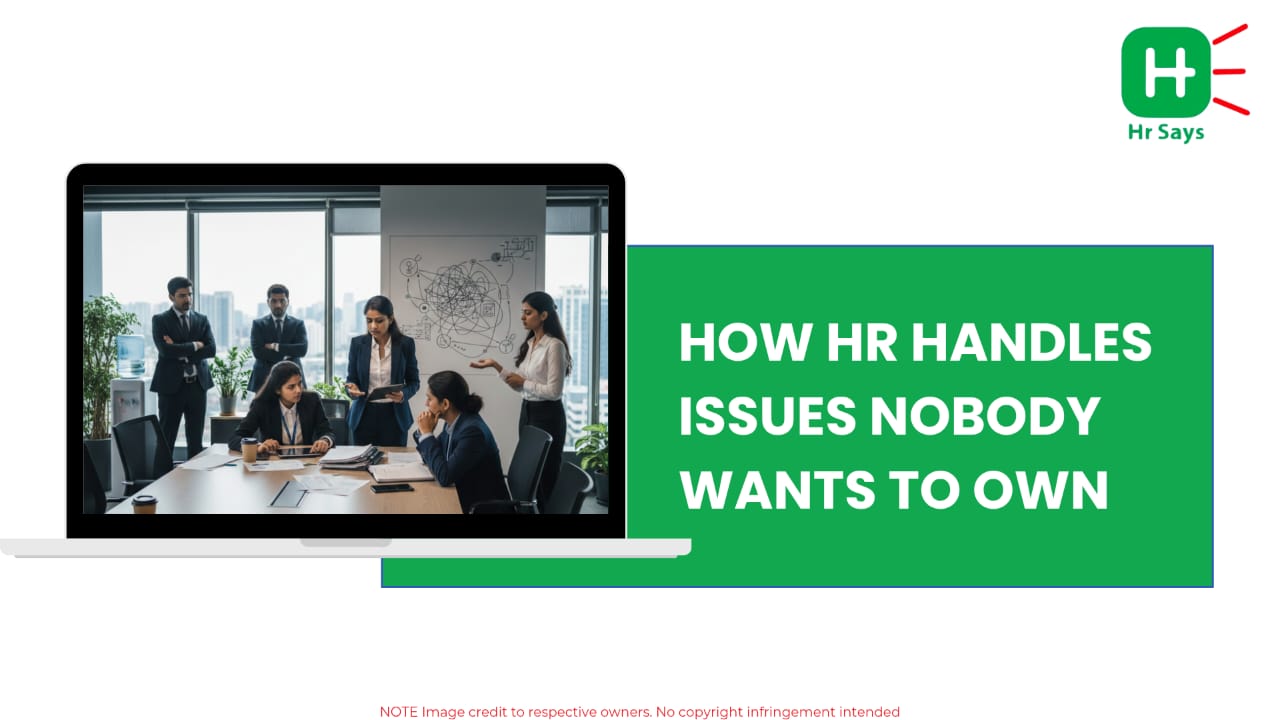
 Unowned workplace issues often land with HR by default. This blog explores why such problems are avoided, how HR manages them quietly, and what organisations can do to prevent silence from becoming culture.




The unspoken is more aggressive in work places than actual conflict. In instances of floaters, the problems rest without owners on the HR desks. These are not topical problems but unaddressed tensions that impact on trust and culture alongside day to day working more than even anyone wants to know.
The Problems That Arrive Without Names
There are also issues in the workplace which are not accompanied by complaints or accountability. They manifest as designs instead of events. A team feels disengaged. A manager is avoided. A process just continues to break, but remains unofficially.
This is normally influenced by the fear, power disparity, or mere fatigue. Speaking up feels risky. Responsibility feels heavy. This way the issue falls to the default destination of HR.
Why Nobody Wants To Own Them
Ownership is avoided because consequences are unclear. Employees worry about labels. Managers worry about exposure. Leadership worries about ripple effects.
What remains unsaid often includes:
● Subtle bias and exclusion
● Passive aggressive leadership behaviour
● Burnout disguised as low performance
● Team conflicts framed as personality issues
● Policy gaps that inconvenience everyone but help no one
These are not dramatic problems, but they are persistent. And persistence is what damages culture over time.
How HR Actually Steps In
HR is rarely handed the full story. Instead, fragments are received through exit interviews, offhand comments, or engagement surveys. The work begins quietly.
Listening is done before acting. Patterns are observed. Language is softened to protect people while still addressing reality. Conversations are facilitated where blame is reduced and clarity is increased.
Often, solutions are indirect:
● Processes are adjusted instead of people being blamed
● Training is introduced instead of warnings being issued
● Feedback loops are created where silence once existed
The goal is stability, not spectacle.
The Balancing Act HR Must Maintain
Neutrality is expected, but humanity is required. HR must protect the organisation while advocating for individuals. This balance is rarely visible and often misunderstood.
Decisions are shaped by:
● Legal boundaries
● Organisational risk
● Emotional safety
● Long term culture impact
Not every issue is escalated. Not every truth is documented. Some are simply managed until the environment becomes safer to address them openly.
Where HR Draws the Line
There is a point where quiet handling is no longer enough. When ethical breaches, harassment, or repeated harm surface, formality replaces informality. Documentation appears. Leadership is involved. Policies are enforced.
This shift is intentional. It signals that avoidance is no longer acceptable and that accountability is now required.
What Organisations Often Miss
HR is not the owner of every uncomfortable issue. It is the holder of space when others step back. When too much is left to HR, the system weakens.
Shared responsibility is healthier. Managers addressing early signs. Leaders modelling openness. Employees feeling safe enough to speak before silence becomes habit.
Conclusion
The hardest HR work happens without announcements. Issues nobody wants to own are carried carefully, handled quietly, and
resolved slowly. When done well, problems disappear before they explode. When ignored, they return louder.