Monday, September 21, 2026
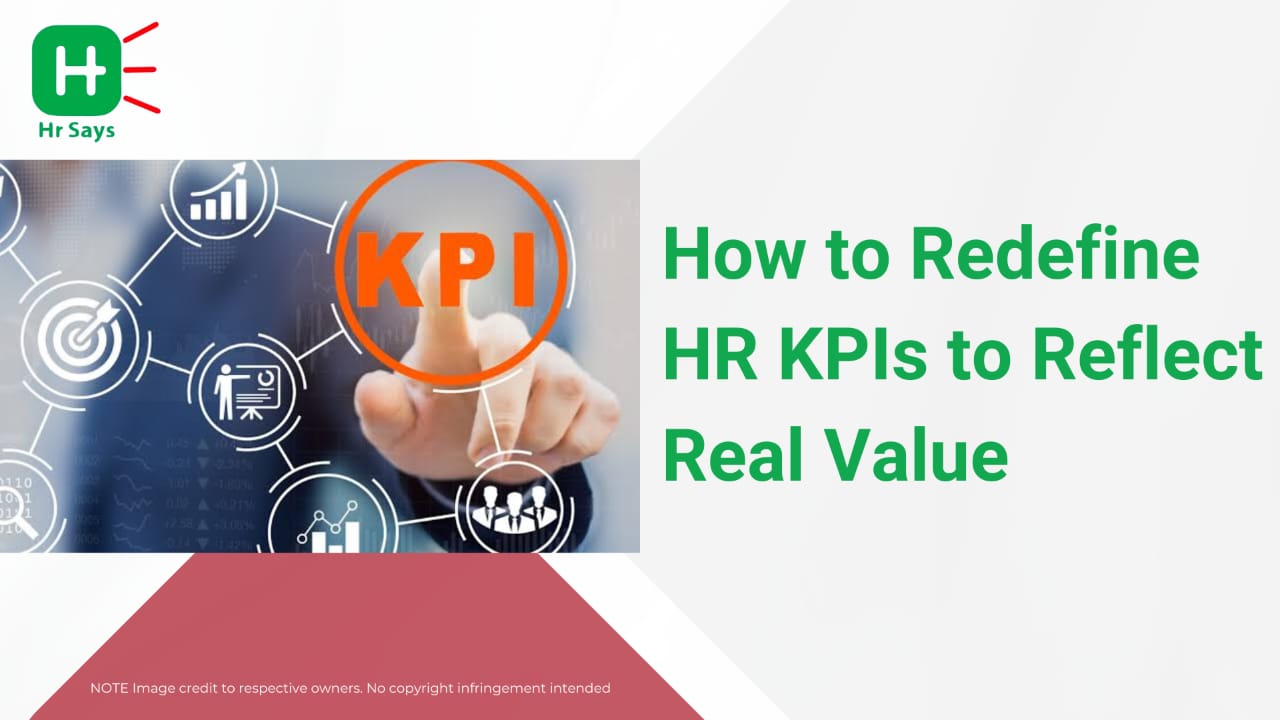
 This blog explores how HR KPIs can be redesigned to reflect real organisational and people value by shifting focus from activity metrics to outcomes, experience, and strategic alignment, enabling HR to drive meaningful impact rather than just report numbers.




The HR metrics previously were constructed with a reporting rather than a meaning purpose. Numbers looked neat. Dashboards felt complete. Yet something felt off. This actual influence remained undetected. The first move towards redefining HR KPIs is to focus on the concept of value rather than on activities, on counting things instead of gauging results that make people and business propel.
Why Traditional HR KPIs Often Miss the Point
Majority of the HR KPIs which existed previously were not meant to be effective but merely efficient. Recruiting rate, training time, turnover rates. All useful, yet incomplete. We see these metrics as evidence of what occurred and not the reason why it was important. Human experience is narrowed down to spreadsheets. Strategic influence just fades away.
What often gets ignored:
● Employee sentiment behind attrition numbers
● Quality of hires beyond time-to-fill
● Real behaviour change after training
● Manager capability and team health
HR value rarely lives in isolation. It shows up in performance, culture, trust, and resilience. KPIs must follow that trail.
Shifting from Activity Metrics to Outcome Metrics
Redefinition starts with one hard question. What business or people outcome is this KPI serving? If the answer feels vague, the metric likely adds noise.
Outcome-focused HR KPIs look different. They connect people initiatives to organisational movement.
Examples of meaningful shifts:
● From training hours to skill application rate
● From engagement scores to manager effectiveness trends
● From retention rate to regretted attrition patterns
● From hiring volume to new hire performance at 90 days
Less tracking is often needed. More thinking is required.
Aligning HR KPIs with Business Strategy
HR KPIs gain power when aligned with where the organisation is heading. Growth, stability, transformation, or recovery. Each phase demands different people priorities.
Key alignment questions to ask:
● What behaviours are critical right now?
● Which roles create disproportionate value?
● Where does risk quietly sit in the workforce?
● What capabilities will be needed next year?
KPIs should reflect these realities. Not generic benchmarks. Not borrowed dashboards. Context matters.
Bringing Employee Experience into Measurement
Experience is not soft. It is predictive. Burnout predicts attrition. Psychological safety predicts innovation. Trust predicts discretionary effort.
Experience-driven KPIs can include:
● Manager quality index from pulse feedback
● Internal mobility velocity
● Career clarity perception scores
● Workload sustainability signals
Data should be listened to, not just collected. Patterns speak louder than averages.
Making KPIs Actionable, Not Decorative
A KPI that cannot trigger action is decoration. Good HR KPIs invite decisions. They highlight trade-offs. They provoke conversations.
To keep KPIs actionable:
● Limit the number tracked at leadership level
● Review trends, not isolated data points
● Pair every KPI with an ownership question
● Revisit relevance every quarter
Silence around a KPI usually signals irrelevance.
Conclusion
Redefining HR KPIs is less about new metrics and more about new thinking. Value lives in outcomes, not activity. When people data reflects real work realities, HR stops reporting history and starts shaping the future.