Saturday, October 24, 2026
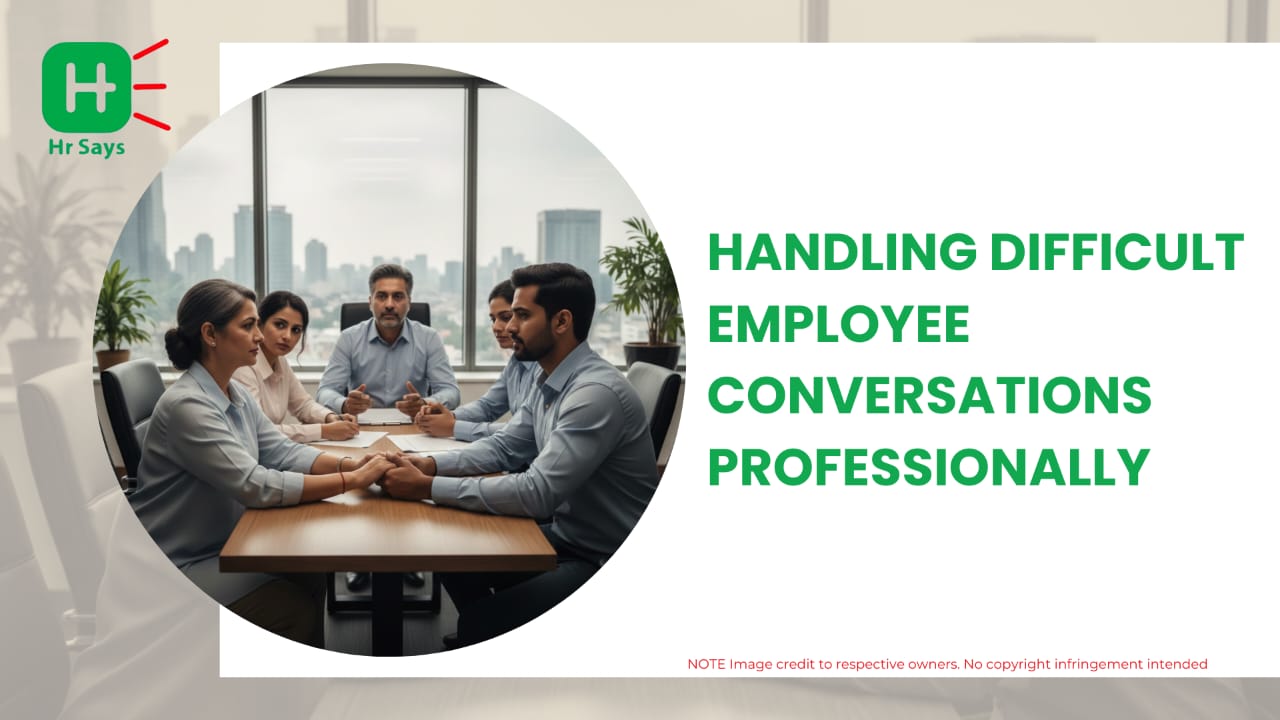
 Difficult employee conversations are inevitable in professional settings. This blog explores how
preparation, neutral communication, and emotional awareness can help managers handle
challenging discussions respectfully while maintaining clarity, trust, and long term workplace
effectiveness.
Difficult employee conversations are inevitable in professional settings. This blog explores how
preparation, neutral communication, and emotional awareness can help managers handle
challenging discussions respectfully while maintaining clarity, trust, and long term workplace
effectiveness.




Workplaces do not only exist on things and achievements. They are constructed on individuals, feelings and unspoken rules. We have all experienced a heavy, awkward, or uncomfortable conversation with one or another manager or other HR professional at one time or another. Such occasions are not often planned but the management of such situations lasts long.
Why Difficult Conversations Cannot Be Avoided
It is safer in the short run through avoidance where it is not. Silence is chosen. Emails are delayed. Clues are thrown about rather than explanations being given. Trust is eroded away in this type of approach over time. The problems of performance are not resolved. Misunderstandings grow. Resentment settles in.
Problematic dialogue with employees does not indicate failure. They are indicators of the fact that leadership is under test. In professional management, they enhance communication at work and support psychological security.
Preparing Before the Conversation Begins
Preparation is often underestimated, yet it shapes the entire outcome. A calm discussion is rarely achieved without prior clarity.
Clarify the Purpose
Before speaking, the intention should be defined. Is feedback being given? Is behaviour being addressed? Is performance improvement being expected? When the purpose is clear, the conversation feels grounded instead of reactive.
Gather Facts, Not Assumptions
Observations should be based on facts, not interpretations. Specific incidents carry more weight than general statements. Emotions are easier to manage when fairness is clearly demonstrated.
Choose the Right Setting
Privacy matters. Respect is communicated through space and timing. Difficult conversations should never be rushed or conducted in public spaces where defensiveness is triggered.
Conducting the Conversation With Professionalism
Once the conversation begins, tone often matters more than words. Calmness is contagious. So is tension.
Speak With Neutral Language
Blame-focused language tends to shut people down. Neutral phrasing keeps the discussion open. Issues are addressed without attacking identity or intent.
Helpful practices include:
● Describing behaviour, not character
● Using clear examples instead of broad labels
● Pausing to allow responses without interruption
Practice Active Listening
Listening is often more powerful than speaking. Employees feel respected when their perspective is heard, even if disagreement exists. Silence, when used well, invites honesty.
Keep Emotions Acknowledged, Not Amplified
Emotions may surface. This is normal. They should be acknowledged without being escalated. Professionalism is shown by staying steady, even when discomfort appears in the room.
Navigating Resistance and Difficult Reactions
Not every conversation ends with agreement. Resistance may show up as defensiveness, denial, or withdrawal. These responses are often protective, not personal.
When resistance arises:
● The conversation should be slowed down
● Expectations should be restated calmly
● Solutions should be discussed collaboratively
Control should not be forced. Clarity should be maintained.
Closing the Conversation With Direction
A difficult conversation should never end vaguely. Next steps must be clear. Accountability should be shared. Support should be visible.
Employees leave such conversations remembering how they felt more than what was said. When dignity is preserved, progress becomes possible.
Conclusion
Handling difficult employee conversations professionally is a leadership skill built through intention, patience, and practice. These moments test emotional intelligence more than authority. When approached with respect and clarity, even uncomfortable discussions can strengthen trust and workplace culture.