 Sunday, September 20, 2026
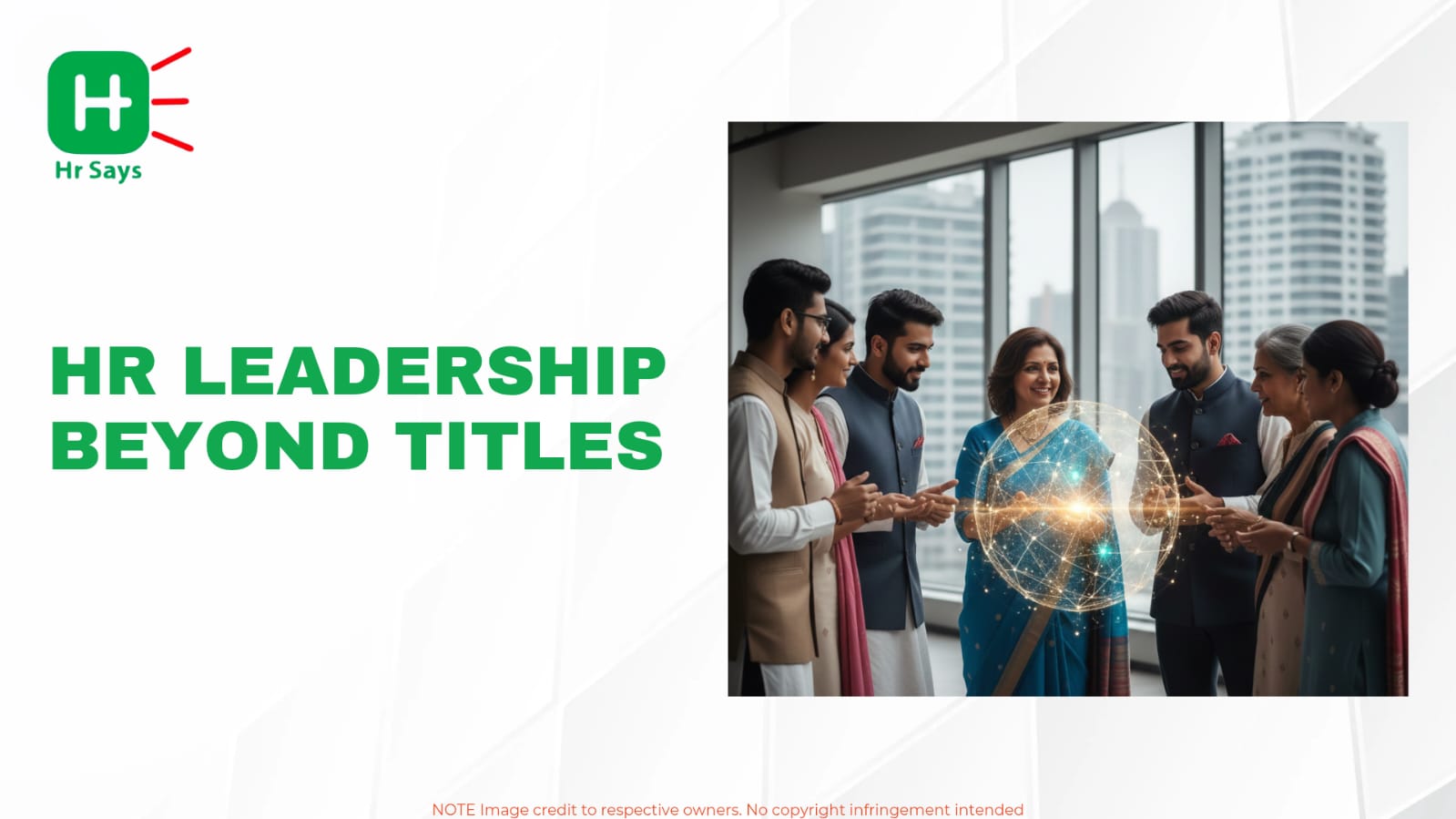
 HR leadership is increasingly defined by influence rather than hierarchy. This article explores
how everyday actions, consistency, and strategic thinking allow HR professionals to lead without
formal authority, shaping culture and trust across modern workplaces.
HR leadership is increasingly defined by influence rather than hierarchy. This article explores
how everyday actions, consistency, and strategic thinking allow HR professionals to lead without
formal authority, shaping culture and trust across modern workplaces.




HR leadership has silently developed. It no longer limits itself to cabins, designations or reporting lines. Power is now established based on trust and understanding, as well as on ordinary judgments. In contemporary workplaces, leadership is no longer considered by power but by the influence that is experienced by people, culture and systems.
Leadership That Operates Without Authority
In most organisations, leadership occurs without an official authority. This sphere often draws HR specialists to it; they are not allowed to give instructions but have to give guidelines. Accommodation: It is acquired by being constant, listening and being just.
Decisions are observed even in cases where they do not exist in announcements. A policy discussed in a clear and understandable manner. One of the concerns discussed privately. A respectably maintained boundary. Such activities are subtle influences on behaviour.
Leadership beyond titles is usually practised when:
● Difficult conversations are handled with balance
● Employee trust is protected during change
● People feel heard even without immediate solutions
The authority may not be visible, but the effect is sustained.
Everyday Actions That Signal Leadership
Behaviour Over Position
Leadership is observed through behaviour more than hierarchy. When ethical standards are upheld during pressure, credibility is earned. When people processes are kept humane, respect is retained.
Small moments carry weight:
● Feedback is given with clarity, not fear
● Processes are explained instead of imposed
● Silence is avoided during sensitive transitions
Such actions are remembered longer than announcements.
Influence Through Consistency
Trust in HR leadership is built slowly. It is strengthened when responses remain consistent across roles and situations. Fairness is expected not occasionally, but repeatedly.
Consistency is often reflected in:
● Uniform policy interpretation
● Predictable handling of grievances
● Transparent communication during uncertainty
Over time, influence is granted naturally.
Strategic Presence in Modern Workplaces
HR leadership today is increasingly strategic. It is expected to contribute to business decisions, workforce planning, and organisational resilience. This role is often advisory, yet deeply impactful.
Trending areas where this leadership is being exercised include:
● People analytics and workforce insights
● Employee experience and retention strategies
● Change management and culture alignment
● Mental health and psychological safety
While final decisions may sit elsewhere, direction is shaped through insight.
Why Titles Are Becoming Less Relevant
Workplaces have flattened. Cross functional collaboration has increased. In this environment, leadership is less about rank and more about contribution.
HR professionals are often approached not because of designation, but because:
● Context is understood deeply
● Confidentiality is respected
● Balanced perspectives are offered
Leadership flows to those who are trusted to handle complexity.
Practising Leadership From Any HR Role
Leadership is not assigned. It is practised. Even early career HR professionals can lead by owning responsibility and acting with intent.
This can be done by:
● Asking better questions instead of giving quick answers
● Documenting processes clearly
● Advocating for fairness when it is inconvenient
● Staying informed on evolving HR trends
Such practices quietly position HR as a leadership function, not just a support role.
Conclusion
HR leadership beyond titles is already present in most organisations. It is practised daily through judgment, empathy, and consistency. While designations may change, influence remains with those who choose to lead through actions rather than authority.