 Saturday, October 24, 2026
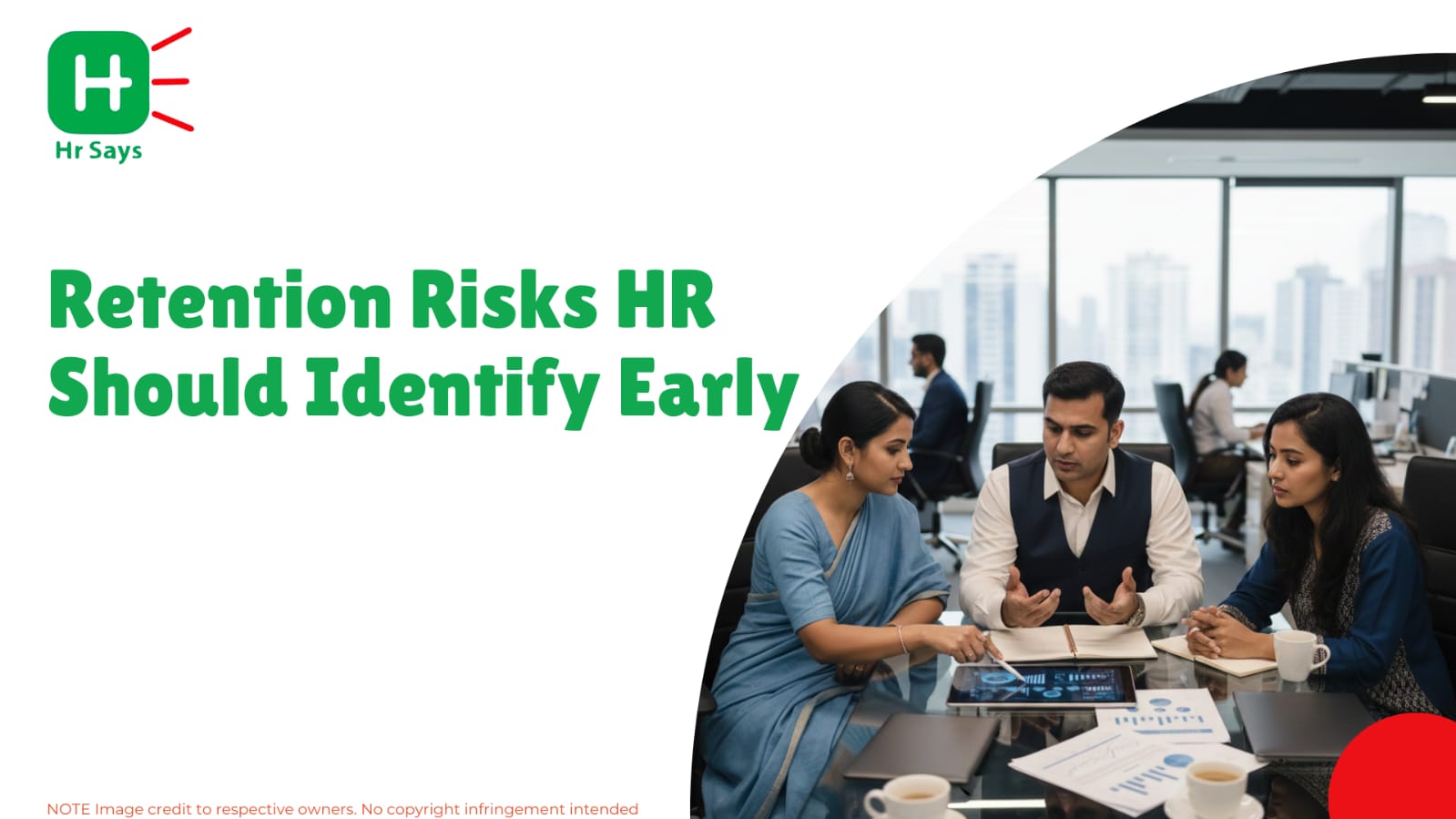
 Employee attrition often begins silently through disengagement, burnout, and cultural
misalignment. This blog explores early retention risks HR should monitor, highlighting subtle
warning signs and practical insights that help organisations respond before talent loss becomes
inevitable.
Employee attrition often begins silently through disengagement, burnout, and cultural
misalignment. This blog explores early retention risks HR should monitor, highlighting subtle
warning signs and practical insights that help organisations respond before talent loss becomes
inevitable.




Talent does not just go away in a day. More commonly, it is lost in silence by slight indication that is overlooked. To HR teams, predicting retention risk is not early identified but simply aware. Trust can be regained and momentum can be placed when subtle changes are noticed as soon as possible.
Silent Disengagement Before Formal Attrition
Reduced Emotional Investment
There is a lot of expressing disengagement way before a resignation email is written. Meetings are in, work is done and fatigue lacks. Such a trend is often linked to silent quitting and losing employee engagement.
Declining Participation Signals
When ideas are no longer shared and collaboration is avoided, detachment is already in motion. Such behaviour is often overlooked because productivity appears stable, even though commitment has weakened.
Managerial Gaps That Push Employees Away
Inconsistent Leadership Experience
Retention is strongly shaped by the quality of daily management. When feedback is irregular or expectations remain unclear, frustration is gradually built. Employees are rarely lost to organisations alone. They are lost to poor leadership experiences.
Lack of Psychological Safety
When concerns are not welcomed or mistakes are punished, silence becomes the default response. Over time, emotional withdrawal is encouraged, and exit plans are quietly formed.
Burnout Hidden Behind Performance
Over-reliance on High Performers
Top performers are often trusted with more responsibility without sufficient recovery time. While output remains high, resilience is slowly eroded. Burnout is rarely announced. It is usually endured until departure feels like relief.
Unsustainable Workload Patterns
Extended work hours and blurred hybrid work boundaries contribute to fatigue. When recovery is not prioritised, retention risks increase even among loyal employees.
Misalignment Between Expectations and Reality
Broken EVP Promises
When the employee value proposition differs from lived experience, trust is damaged. Promises around flexibility, growth, or culture must be consistently delivered. Otherwise, disappointment quietly replaces motivation.
Career Stagnation Perception
Employees do not always leave for better roles. They leave when growth appears blocked. Even perceived stagnation can be enough to trigger job exploration, especially in competitive talent markets.
Culture Drift in Growing Organisations
Loss of Belonging
As teams scale quickly, early cultural anchors can weaken. Employees who once felt seen may feel invisible. Belonging, when lost, is difficult to regain without intentional effort.
Inclusion Fatigue
When diversity and inclusion conversations feel performative rather than lived, disengagement follows. Authentic inclusion is noticed. So is its absence.
Early Warning Signs HR Can Track
● Drop in internal mobility interest
● Reduced learning and development participation
● Increased absenteeism without explanation
● Neutral responses in pulse surveys
● Withdrawal from informal team interactions
These signals are rarely isolated. When patterns are recognised early, retention strategies can be adjusted before damage becomes irreversible.
Conclusion
Retention risks are rarely dramatic. They are gradual, human, and emotional. By listening closely to subtle signals, HR can act with empathy rather than urgency. Early awareness allows trust to be repaired, engagement to be renewed, and valuable talent to be retained.