Monday, September 21, 2026
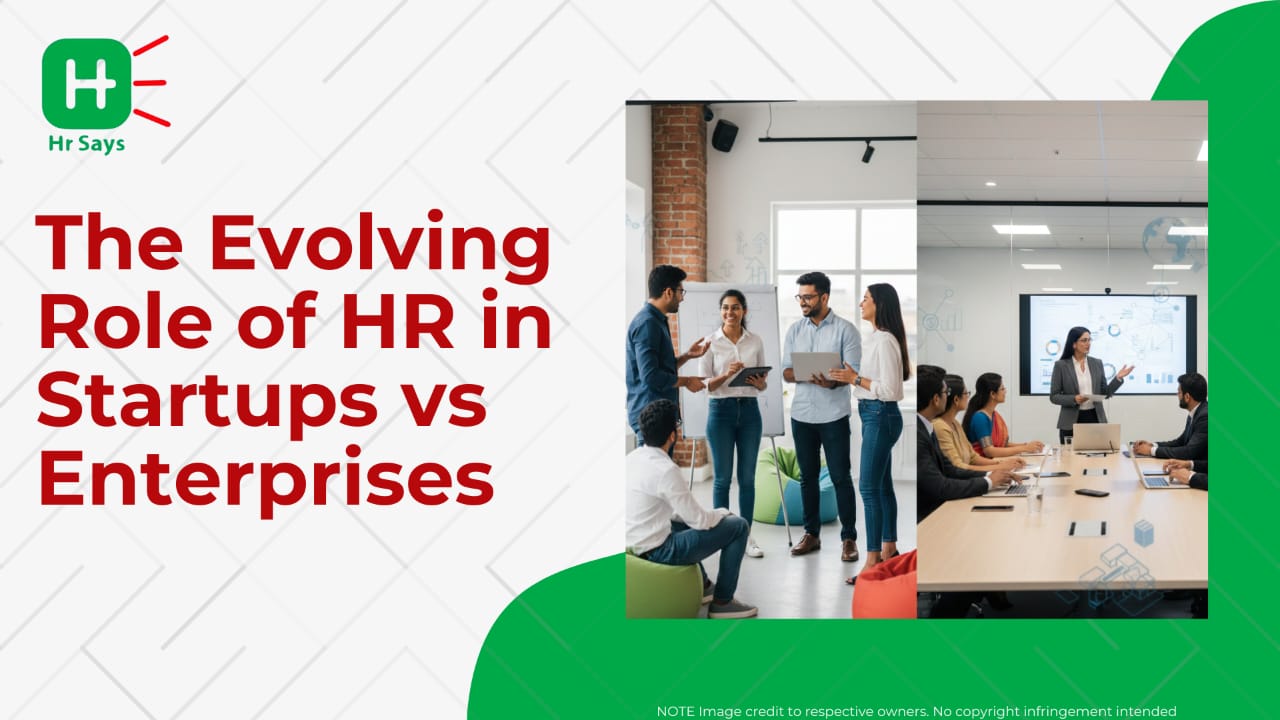
 The role of HR is changing across startups and enterprises. This blog explores how people management differs by scale, where both models are converging, and why modern HR is becoming a strategic driver of sustainable growth.




People management is no longer a function of the background. It is now forming culture, development, and stability in the long term. Both at start up and enterprise levels, HR has been brought nearer to the centre of the business decision making process although the path would seem highly different on both fronts.
HR in Startups: Built for Speed and Survival
Wearing multiple hats
During startups, the early startup stages do not usually have a separate HR department. It is sometimes managed by founders or individual generalist. Onboarding, compliance and payroll, as well as culture are handled together. This is more about speed and flexibility.
Talent as a growth lever
Recruitment is driven by urgency. Skills, mindset, and cultural fit matter more than rigid role definitions. Processes remain flexible. Common priorities include:
● Rapid hiring and employer branding
● Building early culture and values
● Managing employee experience with limited resources
● Handling HR compliance basics without slowing growth
HR in startups works closely with leadership. Decisions are fast. Mistakes are corrected in real time. Structure comes later.
Culture before policy
Formal policies are kept minimal. Culture is shaped through daily interactions, not handbooks. Trust, autonomy, and ownership are encouraged. HR acts more as a people partner than a policy enforcer.
HR in Enterprises: Built for Scale and Stability
Structured and specialised roles
In enterprises, HR is a well-defined function. Teams are divided into talent acquisition, learning and development, performance management, employee relations, and compensation. Each role is specialised.
Process-driven people management
Consistency becomes critical at scale. HR focuses on standardisation and risk management. Key responsibilities often include:
● Workforce planning and succession management
● Performance appraisal systems
● Compliance, labour laws, and governance
● Learning programmes aligned with long-term strategy
Decisions move through layers. Changes are tested before rollout. Stability is prioritised.
Data-led HR strategies
Enterprises rely heavily on HR analytics. Metrics around retention, engagement, and productivity guide decisions. HR technology, automation, and HRMS platforms play a central role in daily operations.
Where the Lines Are Blurring
Startups are growing up
As startups scale, informal systems start breaking. HR gradually introduces policies, performance frameworks, and leadership development. The role shifts from reactive to strategic.
Enterprises are learning agility
Enterprises are adopting startup-inspired practices. Flexible work models, agile hiring, employee wellness, and continuous feedback are becoming common. HR is expected to be more human and responsive.
A shared future
Across both worlds, HR is being seen as a strategic business partner. The focus is moving toward:
● Employee engagement and wellbeing
● Diversity, equity, and inclusion
● Skills-based hiring and upskilling
● Aligning people strategy with business outcomes
Conclusion
HR in startups thrives on flexibility and instinct. HR in enterprises relies on structure and data. Both models are evolving. The most effective HR functions balance empathy with execution, and people needs with business goals.