 Sunday, September 20, 2026
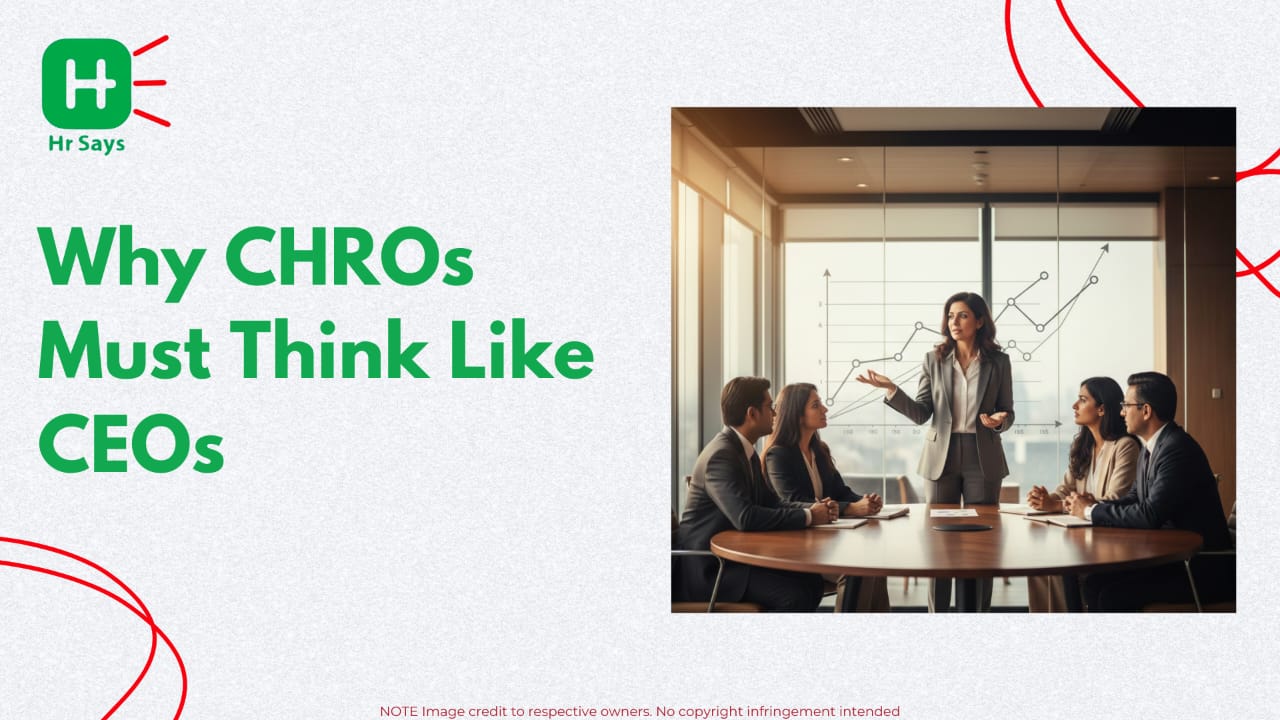
 Modern CHROs are expected to move beyond traditional HR responsibilities. By thinking like CEOs, they align people strategy with business outcomes, strengthen culture, and lead organisations with clarity, data, and long-term vision.




The CHRO position is no longer limited to policies, people management and or compliance. It has become the center of business decisions. Human capital is strategy and not support when organisations are moving quicker than ever before. This is where the CHROs are supposed to think, act and make decisions as CEOs.
The Shift From HR Leadership to Business Leadership
During the past years, HR has been perceived as a supportive role. That has since been shifted somewhat. The current state of workforce strategy has a direct effect on the revenue, growth, and resilience. Hiring, retention, culture and ability building decisions determine whether a business grows or gets stuck.
A contemporary CHRO is no longer questioned merely in the way he/she can control people. The issue of how business outcomes are motivated by people decisions has become the real question. This change requires business sensitivity, knowledge of the market and vision. Thinking on the CEO level is not an option anymore.
Understanding the Business Beyond People
To think like a CEO, a CHRO must understand how the business actually works. Revenue models, cost structures, customer expectations, and competitive pressure need to be familiar ground.
People strategy cannot exist in isolation. Talent acquisition must align with future growth. Learning and development should reflect upcoming skill gaps. Workforce planning must anticipate business cycles, not react to them.
This mindset allows HR leaders to speak the language of the boardroom, not just the people function.
Owning Culture as a Strategic Asset
Culture used to be described as a soft concept. Today, it is recognised as a measurable business driver. High-performing cultures improve productivity, retention, and employer branding. Weak cultures increase attrition and risk.
CHROs who think like CEOs treat culture as infrastructure, not emotion. It is designed intentionally, reinforced consistently, and corrected when misaligned.
Key focus areas often include:
● Leadership behaviour and accountability
● Psychological safety and trust
● Performance clarity and ownership
● Values reflected in daily decisions
When culture supports strategy, execution becomes easier across the organisation.
Data Driven Decisions, Not Assumptions
CEO thinking relies on evidence. The same applies to strategic HR leadership. People analytics, engagement metrics, attrition trends, and productivity data must guide decisions.
Instinct still matters, but it cannot be the only driver. When CHROs use data to predict turnover, identify capability gaps, or measure leadership effectiveness, HR becomes a business intelligence function.
This approach builds credibility and positions HR as a strategic partner, not a cost centre.
Leading Through Uncertainty and Change
CEOs are expected to lead during uncertainty. The same expectation now applies to CHROs. Organisational change, restructuring, hybrid work models, and workforce anxiety require steady leadership.
A CEO mindset helps HR leaders balance empathy with clarity. People are supported, but business priorities are not diluted. Communication stays transparent, even when answers are incomplete.
This balance builds trust and stability during periods of disruption.
Conclusion
CHROs who think like CEOs do not abandon the human side of leadership. It is strengthened through strategic thinking. When people decisions align with business vision, HR becomes a growth engine, not a support function.