 Sunday, October 04, 2026
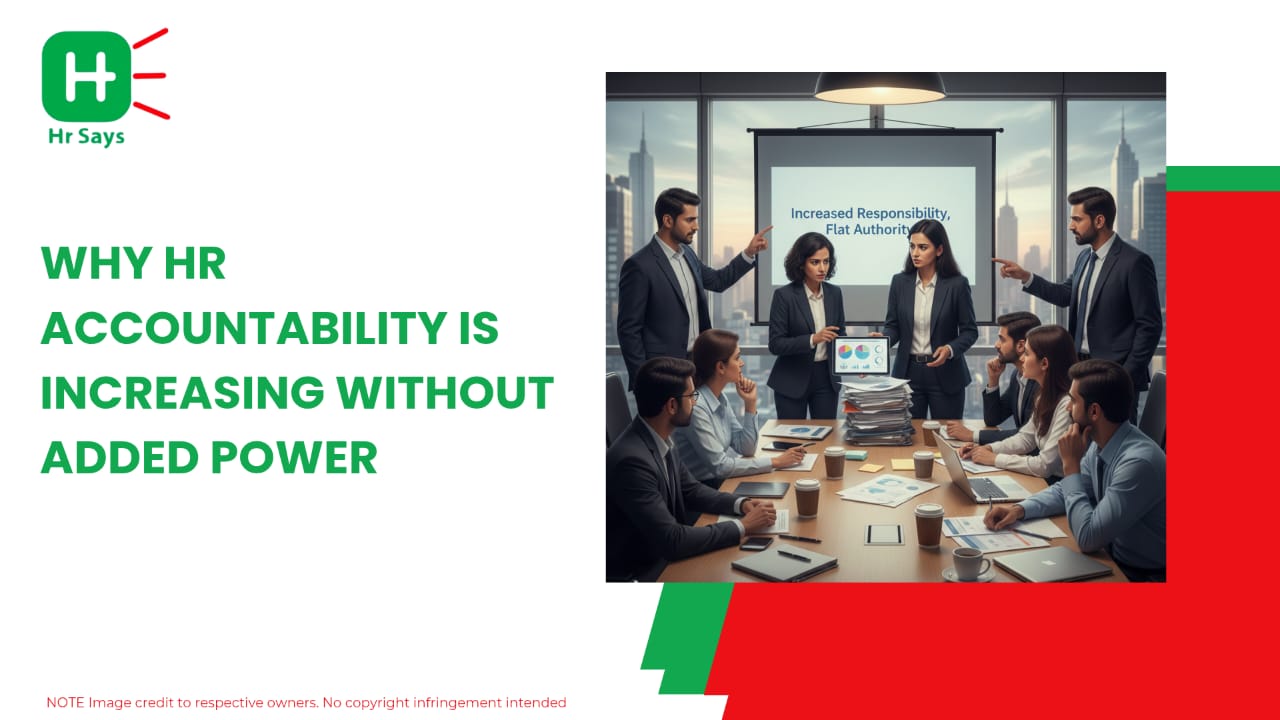
 HR accountability is rising due to increased people risks and strategic expectations. However, authority has not grown at the same pace. This imbalance creates pressure, limits impact, and demands a structural rethink of HR’s role.




Gone are the silent changes in the expectations in the workplace. HR teams are receiving more challenging questions, larger roles, and responsibility on achievements which they do not have full control over. This pressure is increasing in industries, which in many cases does not go hand in hand with the rise in authority and resources.
Accountability Has Moved Faster Than Authority
In the pursuit of performance, compliance, and culture simultaneously, HR accountability has increased. Measures of people are now discussed in board meetings. HR is becoming increasingly the origin of attrition, engagement, and DEI goals and compliance failures. What has been lagging behind is decision making power.
HR may write policies but usually leadership has the final word. HR can design the workforce planning, but budgets are managed in other locations. Power is diffused, whereas the responsibility is seen.
Business Risks Are Being Redirected to HR
Many organisational risks are now people related. Legal exposure, burnout, poor leadership behaviour, and cultural breakdowns are easier to attribute to HR than to business heads. As a result, HR has become the default risk absorber. This shift has been driven by:
● Increased labour laws and compliance scrutiny
● Employer branding pressure in competitive talent markets
● The rise of employee experience as a business metric
● Public accountability through platforms like Glassdoor and LinkedIn
HR is expected to manage these risks, even when structural decisions sit outside its control.
Strategic Expectations Without Strategic Seats
HR is often described as a strategic partner. In practice, this partnership is inconsistently applied. Strategy discussions may happen after decisions are already shaped. Headcount reductions may be announced before HR planning is considered. Leadership behaviour may be tolerated until it becomes a people crisis.
When outcomes fail, accountability flows downward. When decisions succeed, ownership flows upward. This imbalance leaves HR responsible for execution without full participation in direction.
The Tools Gap Is Widening the Pressure
Modern HR teams are expected to operate with data, technology, and speed. Yet many still work with limited analytics access, fragmented systems, and understaffed teams. Digital transformation has raised expectations around:
● Workforce analytics and reporting
● Real time engagement insights
● Compliance tracking across regions
● Change management during growth or downsizing
Without adequate tools or authority, accountability becomes performative rather than practical.
Why This Pattern Is Being Normalised
This imbalance persists because it appears efficient. Accountability can be assigned without changing power structures. HR absorbs pressure quietly, often prioritising organisational stability over escalation. There is also a cultural factor. HR roles are still seen as support functions rather than control points. Influence is expected without enforcement. Over time, this normalisation leads to burnout, defensive HR practices, and risk avoidance instead of innovation.
What Needs to Shift Forward
Accountability and authority must be realigned. This does not mean control over everything. It means clarity. HR needs:
● Early involvement in strategic decisions
● Defined authority over people policies
● Access to data and decision influencing forums
● Shared accountability with business leaders
Until this alignment happens, HR accountability will continue to rise quietly, while power remains static.
Conclusion
HR accountability is increasing because people risks now define business outcomes. Without added power, this accountability becomes fragile. Sustainable organisations will be built only when responsibility, authority, and influence are aligned rather than redistributed silently.