Sunday, September 20, 2026
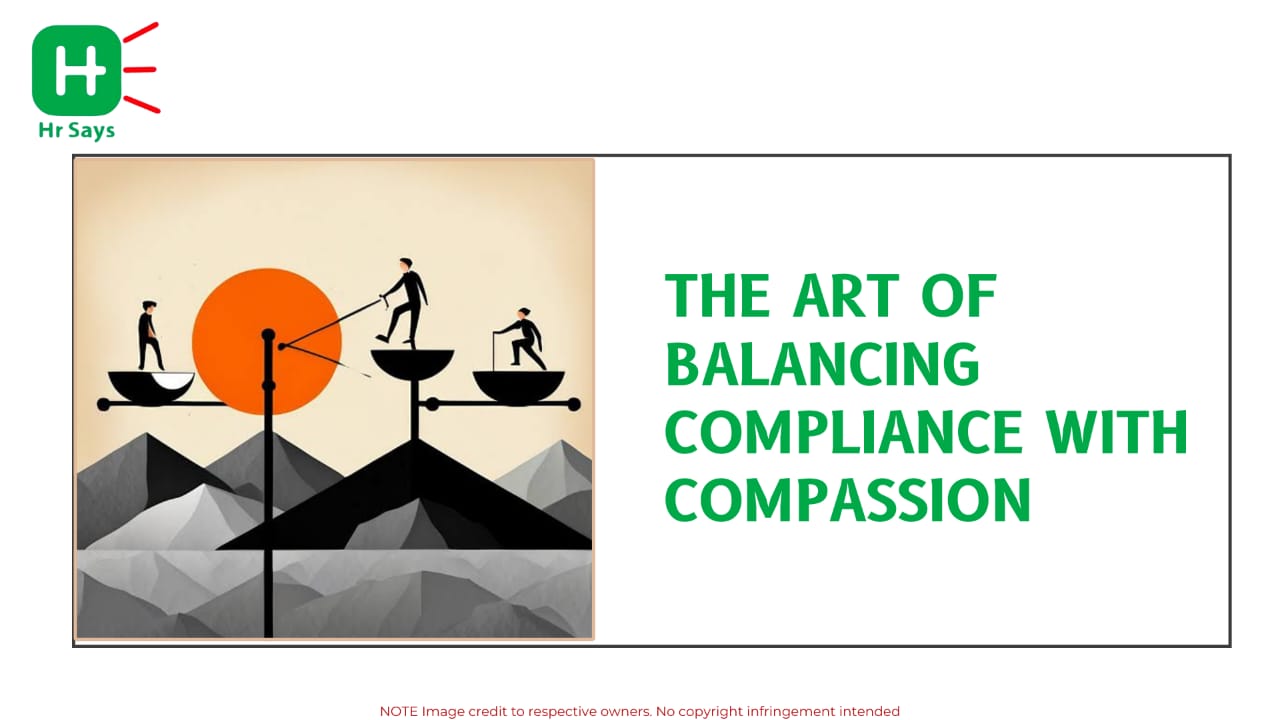
 Balancing compliance with compassion requires structured flexibility, ethical leadership, and human-centred policies. When rules are applied with context and empathy, organisations build trust, reduce risk, and create sustainable cultures without compromising accountability.




Rules exist for a reason. So do people. In between policies and audits as well as checklists, we are living with real people. This equilibrium does not exist in theory. It is practiced on a day-to-day basis at workplaces, institutions and systems where decisions are quietly made to influence trust, dignity and outcome.
Why Compliance Alone Is Never Enough
Obedience brings about uniformity, resoluteness and juristic security. It shields organisations against danger, and people against loss. However, rules, followed without the context, may be cold. Friction comes in when individuals feel that they are processed and not understood. Trust erodes silently.
This gap is becoming increasingly well-known in modern governance, ethical leadership and regulatory structures. Policies which do not take into consideration human realities are not likely to work. It is not strictly the emotional cost. It manifests itself in withdrawal, disappointment, and image tainting.
Compassion Without Structure Can Backfire
Empathy is powerful, but unstructured compassion creates confusion. Inconsistent decisions invite bias. Boundaries blur. Teams feel uncertain about expectations. Compassion works best when it operates within a clear framework. Structure gives empathy direction. When rules are applied thoughtfully rather than mechanically, fairness is preserved while dignity is protected. This balance is what sustainable leadership looks like today.
Where the Balance Actually Breaks
The tension often appears in small moments.
● A rigid policy meeting an exceptional personal situation
● A performance metric clashing with mental health realities
● A compliance checklist overlooking lived experience These moments test values more than systems. How they are handled defines culture. It is here that ethical decision making becomes visible.
Building Human-Centred Compliance
Balance is not accidental. It is designed.
Clear principles before rigid rules
When guiding values are explicit, flexibility becomes safer. Decisions feel less arbitrary.
Training beyond checklists
Compliance training should include emotional intelligence, bias awareness, and situational judgement. This prepares people for nuance.
Documented discretion
Room for judgement should be written into policy. When compassion is permitted openly, it stops being a risk.
Consistent communication
Explaining why a decision was made matters. Transparency reduces resentment, even when outcomes are difficult.
The Role of Leadership in Setting the Tone
Culture flows downward. When leaders model balanced behaviour, teams follow. A compassionate approach to compliance signals psychological safety. It encourages honesty, early reporting, and ethical courage. This is especially relevant in HR compliance, corporate governance, and people operations. Modern workplaces are watching closely. Employees no longer separate policy from values. They experience them as one.
Why This Balance Matters More Now
Regulatory pressure is increasing. So are expectations around empathy, inclusion, and wellbeing. Organisations are judged not just on what they enforce, but how they enforce it. Balancing compliance with compassion is no longer a soft skill. It is a strategic capability. Those who master it build trust that survives audits, crises, and change.
Conclusion
Rules protect systems. Compassion protects people. When both are respected, organisations become credible, humane, and resilient. The art lies not in choosing one over the other, but in holding both steady, even when decisions feel uncomfortable.