Thursday, October 01, 2026
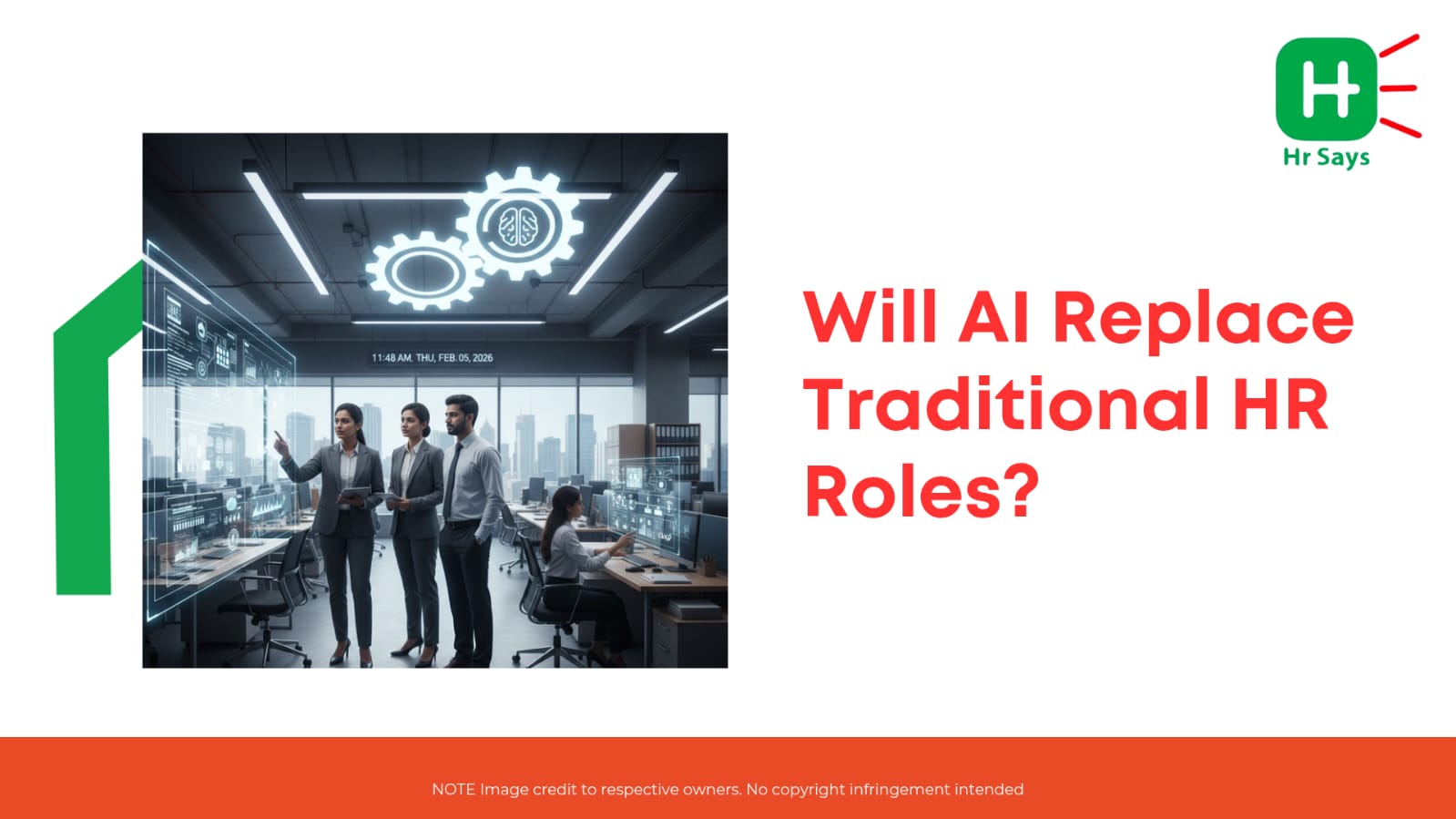
 AI is reshaping HR through automation and data intelligence, but human judgment remains central. Traditional HR roles are not being replaced, but redefined into more strategic, ethical, and people-focused functions within AI-supported workplaces.




Silent changes have already been observed even within HR teams. Paperwork has been eliminated by dashboards. Resumes are now filtered by the use of algorithms after a human eye sight has been received. A question is being put both in the corridors and boardrooms. Will AI help the HR, or will it be done completely?
The Rise of AI in Human Resources
The use of AI in HR did not come out of the blue. It has been sheeted over, laborion by trade. Efficiency has been automated through resume screening, interview scheduling, payroll system, and data of employees. Time has been saved. Errors have been reduced. Decisions have been sped up.
The use of artificial intelligence in recruitment, automation of human resource, people analytics, and workforce intelligence is a trending keyword that has become part of the HR circle talk. Guarantees are being embraced not due to interest, but due to necessity. Scale demands it.
However, these systems are run on pattern, not individuals.
Tasks That Are Already Being Automated
Certain HR responsibilities have been quietly handed over to machines. This shift has been largely accepted because these tasks were repetitive and operational in nature.
Commonly automated HR tasks include:
● Resume screening and keyword matching
● Interview scheduling and candidate communication
● Payroll processing and attendance tracking
● Compliance documentation and record keeping
● Basic employee queries through HR chatbots
Efficiency has been gained here. HR professionals have been freed from routine work. But replacement has not truly occurred.
What AI Still Cannot Replace
Human judgment has not been replicated. Emotional intelligence has not been coded. Context has not been fully understood by machines.
Key HR areas remain deeply human:
Employee Relations and Conflict Resolution
Workplace conflicts are nuanced. Tone, history, and emotion matter. These cannot be interpreted accurately by algorithms alone. Trust is built through conversation, not code.
Leadership Development and Culture Building
Company culture is felt, not measured. Values are reinforced through behavior and leadership, not dashboards. AI may support insights, but culture is shaped by people.
Ethical Decision Making
Bias in AI hiring tools has already been documented. Without human oversight, unfair decisions can be scaled quickly. Responsibility still rests with HR professionals.
How HR Roles Are Actually Changing
Replacement is often assumed, but transformation is what is being seen.
HR roles are being reshaped into:
● Strategic HR partners
● Employee experience designers
● Data interpreters rather than data processors
● Change managers in AI-driven workplaces
AI is being used as an assistant, not a substitute. Decisions are being supported by data, but ownership remains human.
A quieter truth exists here. HR professionals who resist AI may be sidelined. Those who learn to work with it are being elevated.
Skills HR Professionals Need Going Forward
To stay relevant, adaptation is required.
Key skills gaining importance include:
● Data literacy and people analytics understanding
● Ethical oversight of AI tools
● Communication and empathy at scale
● Change management and workforce planning
The role has not disappeared. It has matured.