Sunday, September 20, 2026
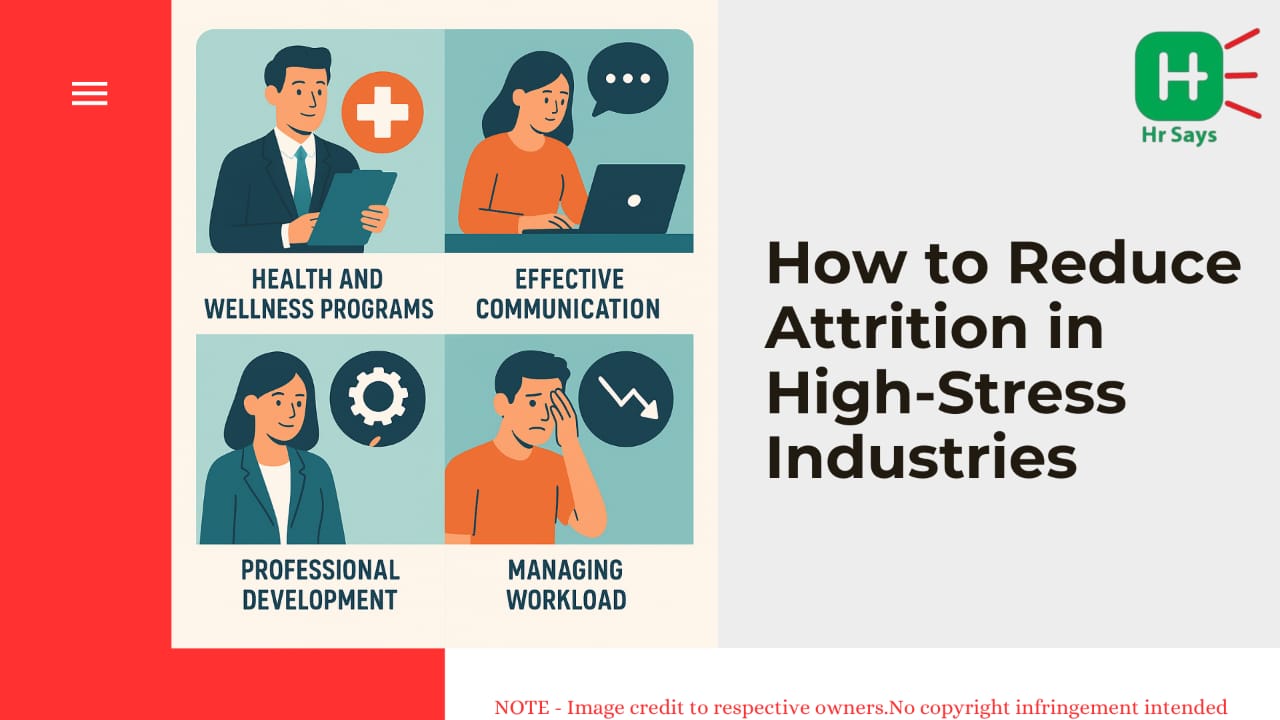
 Attrition in high-stress industries stems from burnout, poor culture, and limited growth. By investing in career development, digital transformation, mental health, and engagement strategies, organizations can build resilience, improve retention, and create workplaces where employees choose to stay.




Why do employees leave the countries that live with speed, deadlines and continuous pressure? Healthcare, IT, finance and even HR, fall within high-stress sectors; one problem that keeps reoccurring is attrition. When individuals are taken out more quickly than they can be restored, both an organization is losing its talent as well as stability. Retention is no longer appealing to perks based but very real strategies that will take advantage of people at the least expected points.
Understanding the Root of Attrition
Behind all no fewer than resignations lies an account. The causes of stress are usually burnout, insufficient recognition, slow development, and substandard work-life balance, in high-stress industries. When these aspects are unaddressed even the finest of talents will start to feel expendable. The initial stepto minimize attrition is to identify these signs of difficulty at the earliest stage.
Building Strong Workplace Culture
A workplace culture that values people is often the strongest defense against attrition. Employees who feel respected are less likely to exit, even in demanding environments. Companies that actively encourage open communication and inclusive practices witness better engagement and longer loyalty.
● Encourage leadership skills for HR managers to foster trust and collaboration
● Invest in diversity and inclusion in Indian workplaces
● Focus on mental health and HR role in India to provide a safety net for employees
When a culture aligns with individual values, employees stay even when the workload feels heavy.
Career Growth and Opportunities
In high-stress jobs, growth is the safety valve. Without opportunities to learn or rise, employees eventually search outside. Career growth for HR professionals, engineers, or doctors isn’t just about promotions, but about building clear roadmaps.
● Offer continuing medical education online India for healthcare staff
● Provide upskilling and reskilling programs for employees
● Create networking opportunities for doctors and professionals to expand horizons
When organizations give employees the tools to grow, attrition reduces naturally.
Role of Technology in Retention
Technology, if used right, can lighten workloads that feel overwhelming. From HR tech trends in India 2025 to SaaS hospital management software India, digital solutions simplify routine tasks. In healthcare, ready-made hospital management solutions and OPD/IPD software reduce manual load, allowing staff to focus on patient care. In HR, automation tools handle compliance, payroll, and analytics, freeing managers to invest in people.
The role of AI in HR management and AI in healthcare for Indian doctors also points toward smarter ways of managing stress-heavy operations. This not only improves efficiency but also reduces frustration, which often leads to exits.
Employee Engagement as a Long-Term Strategy
Engagement strategies are not just about team-building games or recognition days. For high-stress industries, they need to be structural. Employees should feel that their contribution matters every single day.
● Implement employee engagement strategies for Indian companies tailored to stress-prone environments
● Introduce patient engagement strategies for doctors to reconnect purpose with profession
● Strengthen reputation management for doctors in India and professionals in similar fields
When engagement is sustained, attrition numbers begin to fall.
Conclusion
Attrition in high-stress industries will never disappear entirely, but it can be managed. The real solution lies in balancing culture, growth, technology, and engagement. Workplaces that treat people as assets rather than numbers see loyalty even in the toughest conditions. And in industries where pressure is the norm, this loyalty becomes the competitive edge.