 Sunday, September 20, 2026
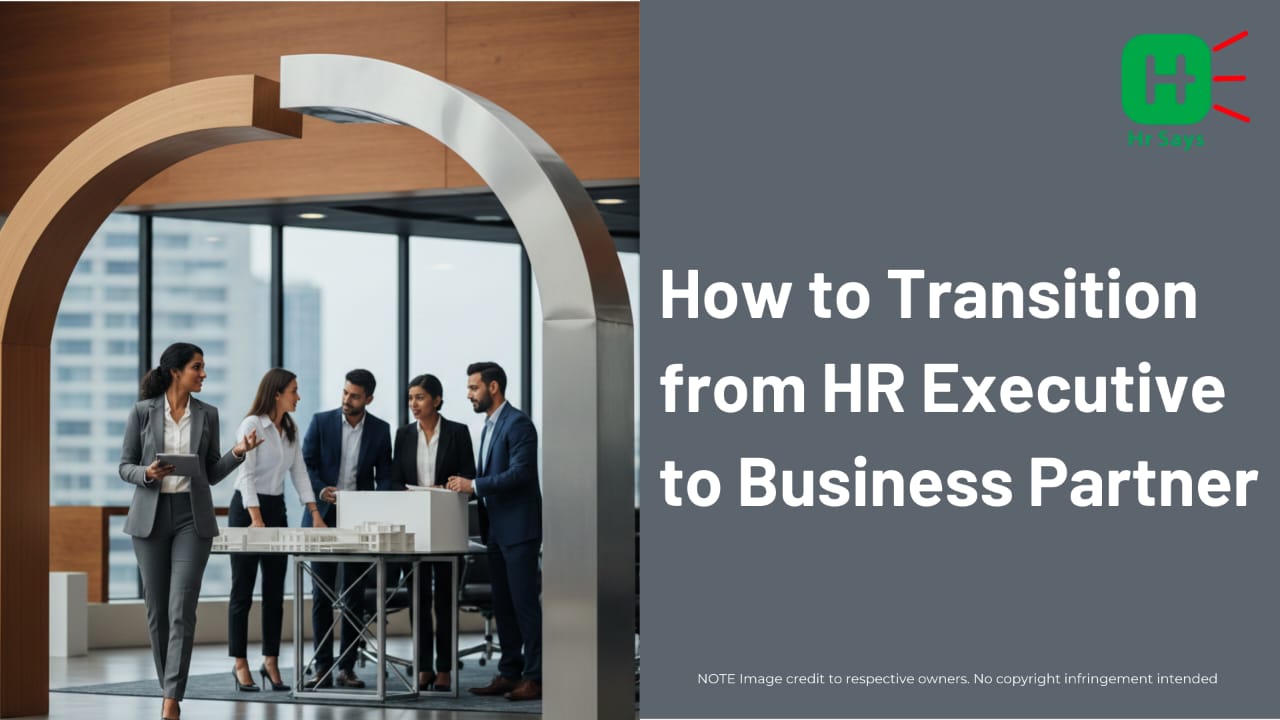
 This blog explains how HR Executives can transition into Business Partner roles by shifting mindset, building business acumen, improving stakeholder influence, and aligning HR efforts with organisational strategy in a practical and realistic way.




The transformation of HR Executive to HR Business Partner is not concerned with new term. It is regarding a change of perception of work. Less execution. More influence. This shift is usually obscure yet when the correct focus is placed then it becomes planned and becomes viable.
Understand the Real Difference Between Execution and Partnership
An HR Executive is supposed to facilitate procedures. As an HR Business Partner, one is expected to aid in decisions. The centre of policies is no longer. Business outcomes are. This change starts in the mind before it reflects in the paper. The work has to gradually shift where employees have to complete tasks and focus on interpreting problems. Questions change. Rather than asking What is the policy? one asks What does the business need now?
Build Business Acumen Before Asking for the Role
Credibility is built through understanding the business. Revenue models, cost structures, growth goals, and market risks must be understood. HR strategy only makes sense when business strategy is clear. Time should be spent reading financial reports, listening to leadership discussions, and asking context driven questions. Over time, HR inputs start aligning naturally with business language.
Key business areas to focus on
● How the company makes money
● Key performance indicators used by leaders
● Workforce cost versus productivity
● Short term and long term business goals
Shift from Policy Expert to Problem Solver
Business Partners are not hired for answers alone. They are valued for judgment. Employee issues are rarely isolated. They are often symptoms of deeper structural or leadership gaps. Instead of reacting, patterns should be observed. Trends in attrition, engagement, or performance must be connected back to business impact. This is where strategic HR thinking begins.
Daily mindset shifts that matter
● From compliance to context
● From escalation to recommendation
● From instructions to insights
Strengthen Stakeholder Management Skills
Influence replaces authority at this level. Leaders do not look for reminders. They look for clarity. Conversations must be concise and backed by reasoning. Trust is built when HR advice reflects business reality, not textbook frameworks. Over time, HR becomes a sounding board rather than a service desk.
Start Acting Like a Business Partner Before Becoming One
Waiting for a promotion often delays growth. Strategic behaviour should start early. Volunteer for cross functional projects. Offer data driven suggestions. Participate in workforce planning discussions when possible. Even small contributions create visibility. Gradually, perception shifts before designation does.
Practical actions to take now
● Present insights instead of reports
● Link HR metrics to business outcomes
● Ask leaders what keeps them up at night
● Document impact driven contributions
Prepare for the Emotional Shift
This transition is not always comfortable. Decisions may be questioned. Advice may be challenged. Neutrality becomes essential. Emotional distance helps maintain credibility. Over time, confidence grows from consistency, not validation.
Conclusion
Moving from HR Executive to HR Business Partner is a strategic evolution. It requires patience, awareness, and deliberate skill building. When business understanding deepens, influence follows naturally. Titles change later. Thinking changes first.