Saturday, October 24, 2026
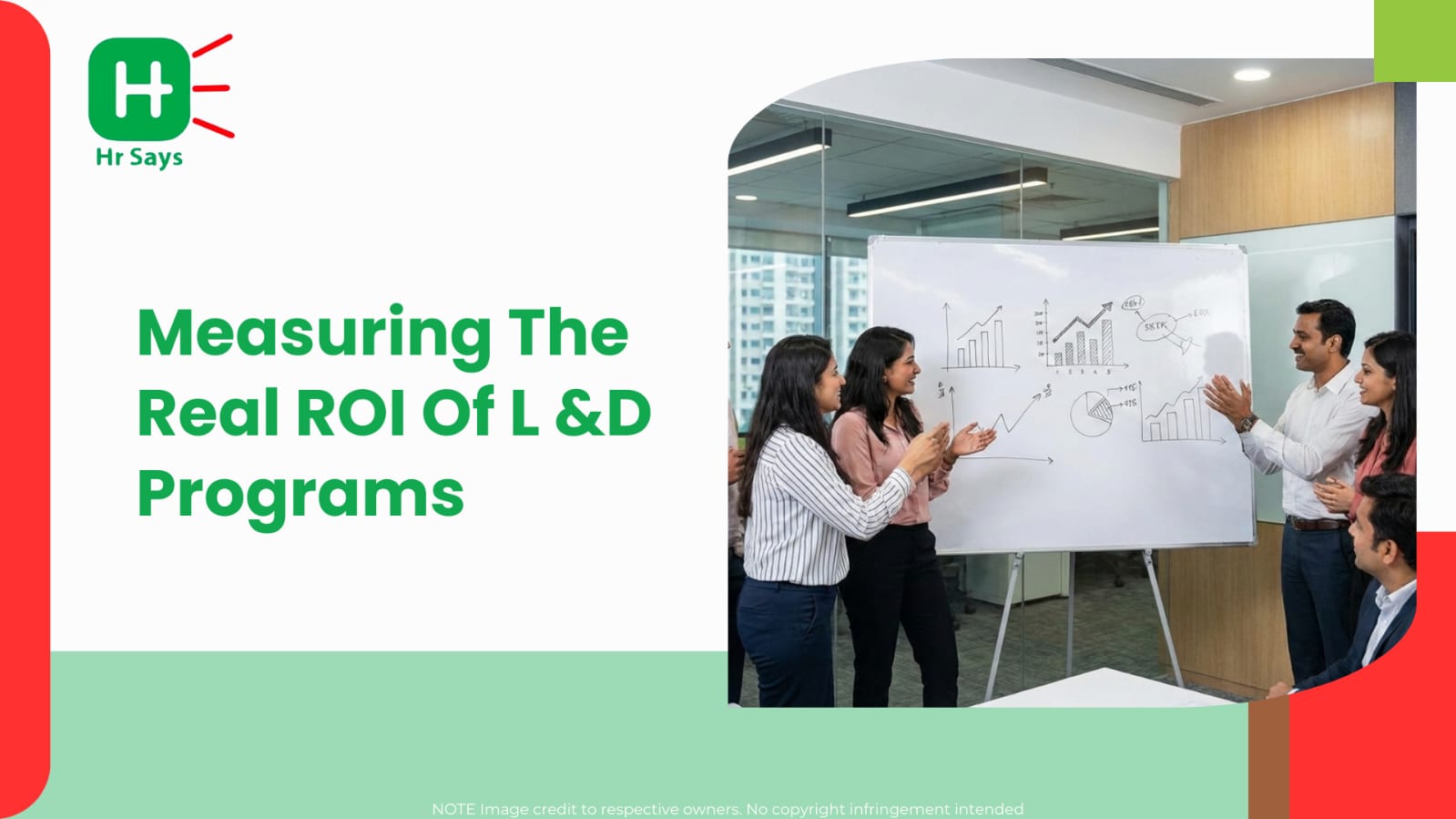
 Measuring L&D ROI requires alignment with business goals, performance tracking, and behavioral impact assessment. True value is reflected not in training completion, but in measurable improvements in productivity, engagement, and long-term organizational capability.




Learning and Development has been silently sliding the scale fronting to being an auxiliary to a strategic attribute. However, there is one question that still emerges in board rooms and HR reviews, and that is, is the investment really paying off? The actual ROI of L&D programs can hardly be calculated with references to the attendance or completion rates.
Why ROI In L&D Is Often Misunderstood
Most organizations consider superficial training measures as a success. The reports on completion are made. Feedback forms are to be gathered. Certificates are issued. It feels productive. But impact is not often studied thoroughly.
The real return on investment in corporate training is not found in learning hours. It is reflected in performance improvement, behavioral shifts, and business outcomes. When L&D ROI is reduced to satisfaction scores, strategic clarity is lost.
Several gaps are usually observed:
● Learning metrics are disconnected from business KPIs
● Performance data is not tracked post-training
● Leadership alignment is missing
● Digital learning analytics are underutilized
In the era of hybrid workforce models and AI-powered learning platforms, expectations have changed. L&D is now expected to drive measurable outcomes such as productivity growth, employee engagement, retention improvement, and leadership readiness.
If these outcomes are not defined before the program begins, ROI becomes difficult to calculate later. Measurement should not be an afterthought. It should be built into the learning design itself.
What Real ROI Actually Looks Like
Real ROI is both quantitative and qualitative. It is not only about financial return. It is about capability development that strengthens long-term business resilience.
At its core, L&D ROI can be viewed across four layers:
Business Impact
Revenue growth, cost reduction, and efficiency gains are considered the strongest indicators. If a sales enablement program leads to improved conversion rates, measurable business value is created.
Performance Improvement
Individual performance metrics must be compared before and after training.
This may include:
● Reduced error rates
● Faster project completion
● Higher customer satisfaction scores
● Increased productivity
When improvement is visible in measurable performance indicators, training impact becomes tangible.
Behavioral And Skill Transformation
Modern upskilling and reskilling initiatives focus heavily on behavioral change. Leadership development programs, for example, should reflect in improved team collaboration and decision-making quality.
These shifts may not always be immediately financial, but they shape long-term organizational culture.
Talent Retention And Engagement
Employee development has been linked to stronger engagement levels. When employees feel growth is supported, voluntary attrition often declines. In competitive talent markets, this outcome carries significant financial implications.
Practical Steps To Measure L&D ROI Effectively
ROI measurement should be systematic and realistic. A structured approach is recommended.
First, learning objectives must be tied to strategic business goals. If digital transformation is a priority, training programs should be aligned with relevant skill gaps.
Second, baseline data must be collected before training begins. Without a starting benchmark, improvement cannot be validated.
Third, post-training performance tracking should be scheduled over time rather than immediately after completion. Skill application takes time to stabilize.
Fourth, learning analytics tools and HR tech platforms should be leveraged. Data-driven HR practices are increasingly shaping decision-making in people management.
Finally, stakeholder communication must be consistent. Senior leaders should be informed not only about participation numbers, but about measurable business outcomes.
Conclusion
L&D should not be viewed as a cost center. When strategically designed and properly measured, it becomes a value multiplier. Real ROI is revealed when learning translates into performance, engagement, and sustainable growth.