 Saturday, October 24, 2026
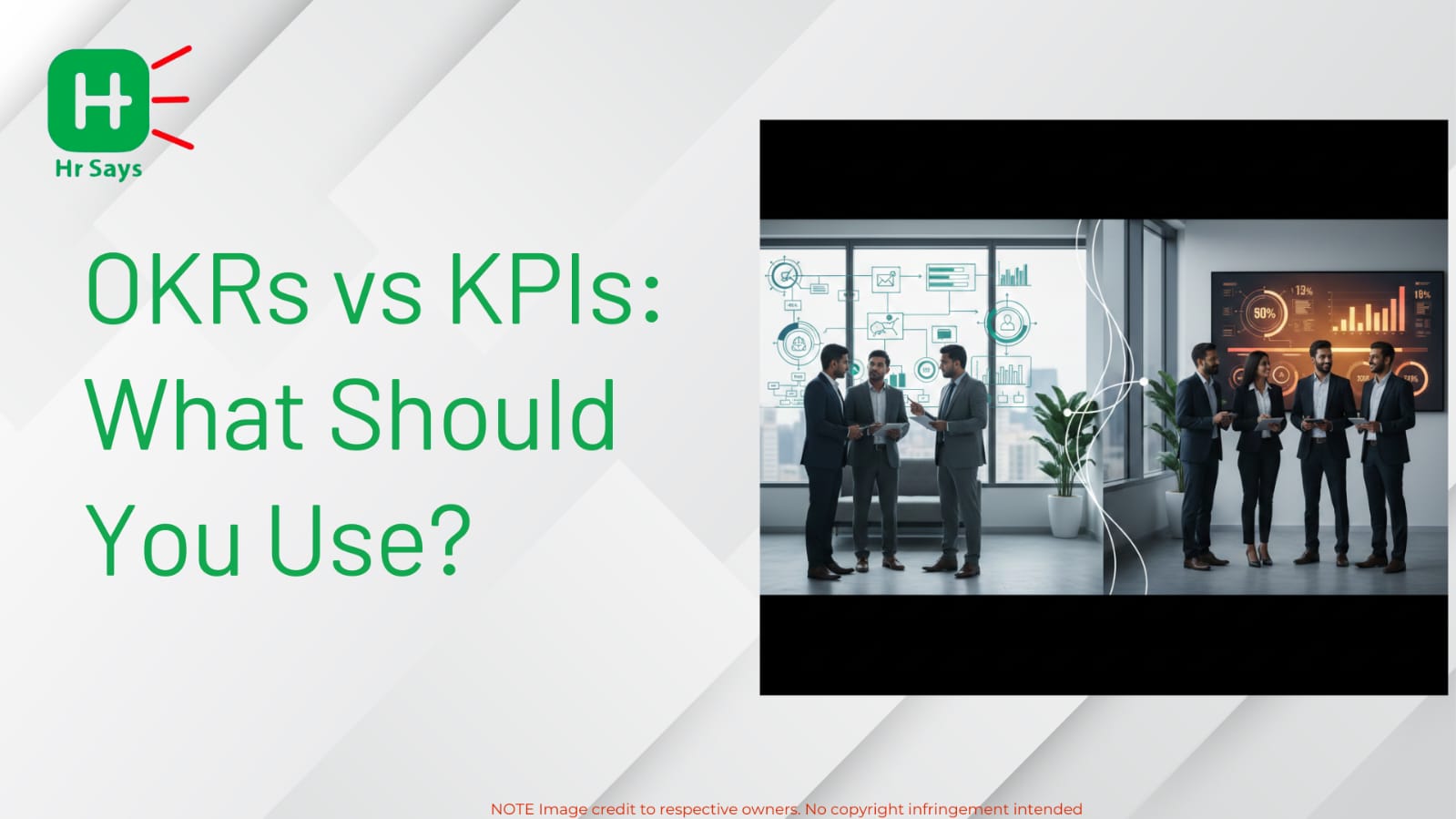
 OKRs and KPIs serve different yet complementary purposes. KPIs track ongoing performance, while OKRs drive ambitious goals. When integrated strategically, they support alignment, accountability, and measurable growth within modern performance management systems.




Every organization wants things to make sense. Teams want direction. Leaders want to be able to measure progress. Yet confusion tends to set in when goal setting frameworks are discussed. OKR and KPI are often used interchangeably with varying purposes. In case growing and performance management and strategic alignment are important for you, then the difference must be understood clearly.
Understanding KPIs: Measuring What Already Matters
Key Performance Indicators, or for short KPIs, are quantifiable values that reflect the effectiveness of results of objects. They are generally linked with the continued tracking of performances and with efficiencies of operations.
In many organisations KPIs are set annually and monitored monthly or quarterly. They provide stability. They are indicative of only what needs to be continued or improved.
Why KPIs Are Widely Used
KPIs are often preferred because they bring structure and accountability. Performance metrics become visible. Results are quantified. Departments are evaluated consistently.
Common examples include:
● Revenue growth rate
● Customer retention rate
● Conversion rate
● Employee productivity metrics
● Website traffic and SEO rankings
KPIs are particularly useful in digital marketing strategy, HR analytics, and financial forecasting. They help organizations monitor performance trends over time. However, they rarely inspire transformation. They measure the present. They protect the baseline.
If your focus is operational control, efficiency, and predictable performance, KPIs work reliably. They answer the question: Are we performing as expected?
Understanding OKRs: Driving Ambition and Change
Objectives and Key Results, known as OKRs, are designed to stretch teams beyond routine performance. They were popularized by companies like Google and are now widely adopted in startup culture and agile management systems.
An OKR consists of:
● A clear, ambitious objective
● Three to five measurable key results
The objective defines direction. The key results define measurable outcomes. Together, alignment is strengthened across teams.
Why OKRs Encourage Growth
Unlike KPIs, OKRs are usually set quarterly. They are meant to challenge existing limits. Ambition is encouraged. Innovation is often triggered.
For example:
● Objective: Improve customer experience.
● Key Results:
○ Increase Net Promoter Score by 20 percent
○ Reduce customer support response time by 30 percent
○ Launch two new customer feedback initiatives
OKRs are effective when rapid growth, digital transformation, or organizational change is being pursued. They support cross-functional collaboration and transparency. Employees understand how their work connects to broader business goals.
However, OKRs require strong communication and disciplined tracking. Without alignment, they can create confusion.
OKRs vs KPIs: What Should You Choose?
The decision should not be framed as a competition. Both frameworks serve distinct roles within performance management systems.
KPIs are best used when:
● Stability and consistency are required
● Long-term tracking is necessary
● Operational efficiency is the priority
OKRs are ideal when:
● Strategic goals need acceleration
● Innovation and agility are required
● Teams must align around ambitious outcomes In modern business strategy, both are often integrated. KPIs maintain performance health. OKRs drive strategic breakthroughs. When combined thoughtfully, organizational alignment improves significantly.
Clarity is not achieved by choosing one over the other. It is achieved by understanding their intent.
Conclusion
Goal-setting frameworks should serve strategy, not complicate it. KPIs measure what must be sustained. OKRs define what must be transformed. When aligned properly, both tools strengthen performance tracking, employee engagement, and long-term growth planning.