 Saturday, October 24, 2026
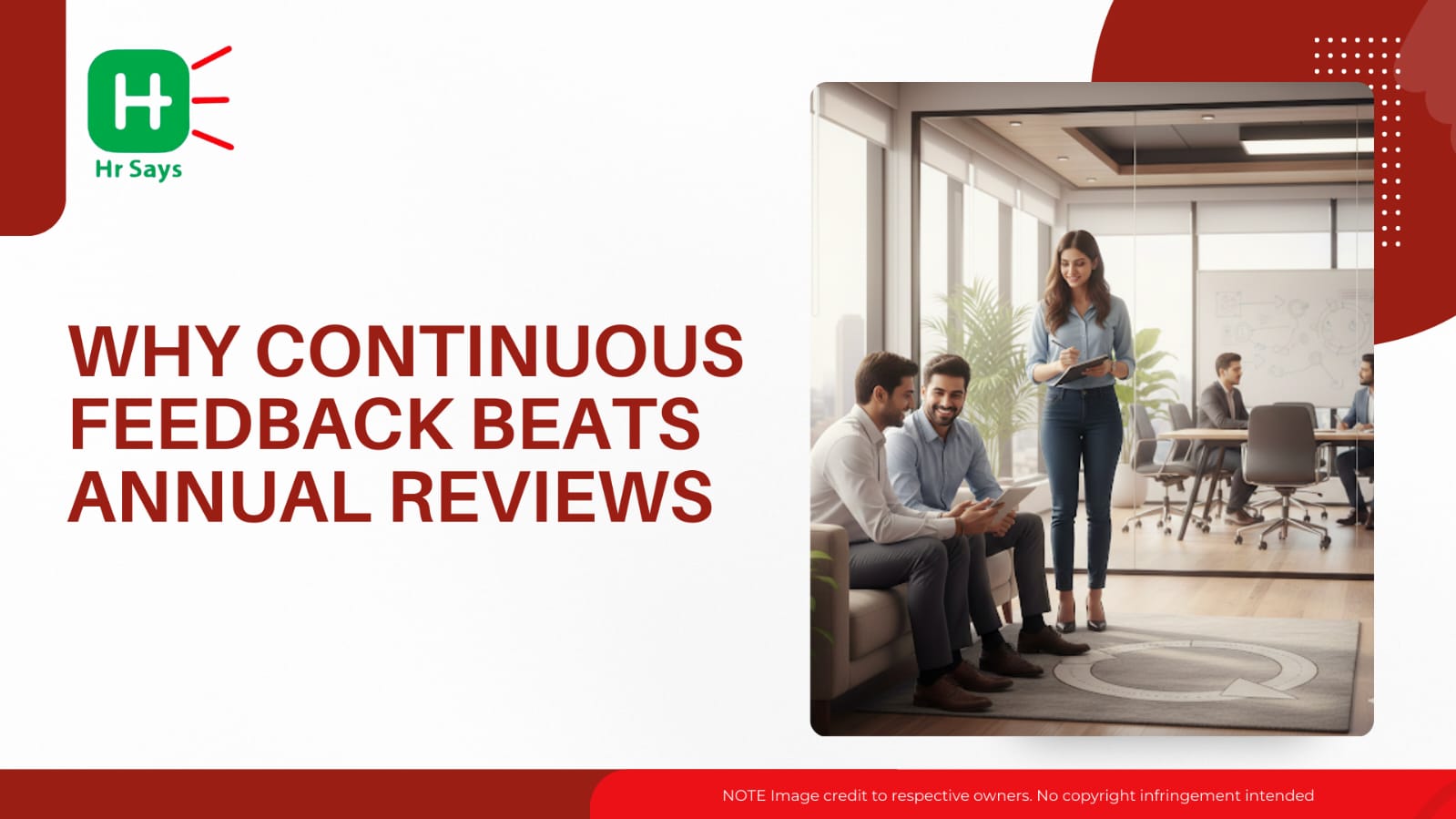
 Annual reviews compress a year into one conversation, often delaying improvement. Continuous feedback enables real-time clarity, stronger engagement, and faster development. In modern workplaces shaped by agility and digital tools, ongoing dialogue supports healthier performance management systems.




Performance reviews are commonly greeted with anxiety. For many of the employees, an entire years work is condensed to a single meeting. Important details are forgotten. Small wins are overlooked. Concerns are postponed for too long. In the fast-paced nature of our modern workplace, that model is gradually becoming out of date.
The Problem With Annual Performance Reviews
In many organizations, annual performance reviews are a ritual of some sort. Goals are set in January. Conversations are delayed until December. Memories are long gone and priorities change by then.
A single yearly evaluation is expected to evaluate productivity, employee engagement, skill development and team contribution. That is a heavy load to take up one meeting.
Several issues are commonly observed:
● Feedback is delayed and often outdated
● Recency bias influences evaluation
● Employee morale is affected by surprise criticism
● Performance management becomes reactive instead of proactive
When feedback is delivered once a year, improvement is also delayed. Small issues are allowed to grow. Misalignment between managers and employees remains unaddressed. In hybrid work models and remote teams, this gap becomes even wider.
Modern workplaces are driven by agility and real-time collaboration. Yet traditional appraisal systems are built on static timelines. A mismatch is created.
Why Continuous Feedback Creates Stronger Teams
Continuous feedback operates differently. Instead of one high-stakes meeting, regular conversations are encouraged. Short check-ins are conducted monthly or quarterly. Expectations are clarified in real time.
When feedback loops are shortened, performance improvement becomes immediate.
Clearer Expectations
Goals are discussed frequently. Employees are not left guessing about priorities. Adjustments are made as business needs change. This supports agile performance management and reduces confusion.
Higher Employee Engagement
When appreciation is expressed regularly, motivation is strengthened. Recognition is not postponed for twelve months. Employees feel seen for their day-to-day contributions.
Research in employee experience consistently shows that timely recognition improves retention and workplace culture. A sense of psychological safety is gradually built.
Faster Skill Development
Constructive feedback, when shared early, allows skills to be refined continuously. Learning becomes part of daily work rather than an annual correction.
In modern HR trends, coaching-based leadership is being prioritized. Managers are encouraged to guide rather than judge. Continuous feedback supports that shift.
Stronger Manager-Employee Relationships
Frequent conversations reduce fear around evaluation. Trust is developed through transparency. Instead of a formal performance appraisal meeting, ongoing dialogue becomes the norm.
This approach aligns well with digital performance management tools that track goals, OKRs, and real-time progress. Technology is being used not to monitor employees, but to support growth.
Making Continuous Feedback Practical
Continuous feedback does not require complex systems. It can be implemented through simple habits:
● Schedule brief monthly one-on-one meetings
● Provide specific and actionable feedback
● Balance constructive input with recognition
● Encourage upward feedback from employees
● Document progress consistently
The focus should remain on growth, not judgment. When feedback is embedded into everyday conversations, improvement feels natural. Performance discussions stop being events. They become part of culture.
Annual reviews may still serve as summary checkpoints. However, they should not be the only moment when performance is discussed. In a workplace shaped by remote collaboration, digital transformation, and evolving talent management strategies, continuous feedback offers a more realistic approach.
Conclusion
Work is no longer static, and performance management should not be either. When feedback is delivered consistently, improvement is accelerated. Anxiety is reduced. Engagement is strengthened. Continuous feedback does not replace accountability. It simply makes growth a shared, ongoing process. Abstract Annual reviews compress a year into one conversation, often delaying improvement. Continuous feedback enables real-time clarity, stronger engagement, and faster development. In modern workplaces shaped by agility and digital tools, ongoing dialogue supports healthier performance management systems.